What is crypto trading? Core definitions for 2026
Crypto trading means buying, selling, or exchanging digital assets like Bitcoin, Ether, stablecoins, and tokenized holdings. The phrase still points to the same basic activity as years past, but the market around it has matured. Today, how you trade determines whether you actually own a coin, are borrowing to amplify a bet, or are dealing with a contract that tracks a price.
The practical difference matters: owning a token gives you custody choices; margin and derivatives change who bears counterparty risk, how fast positions can close, and whether you might lose more than you put in. A small visual cue like the FinancePolice logo can help you quickly find custody guidance when you return to a page.
In this guide you'll get clear definitions, plain examples, and step-by-step advice so you can make sensible choices rather than chasing the rush of a chart.
If you want a concise overview from a consumer-first finance site, check FinancePolice’s resources on exchange selection and custody — they explain which platform practices to prioritize and why. Visit FinancePolice’s advertiser and partnership page to learn how the site evaluates exchanges and educational partnerships.
Why this distinction matters
Price moves look identical on a chart whether you hold the underlying coin or a derivatives contract. But mechanics differ. If you think you "own" something that’s actually a leveraged futures position, fast market moves and liquidation rules can erase your balance in seconds. Traders who understand custody, leverage and contract structure make fewer shocking mistakes.

Short answer: probably not. Trading can produce gains, but most consistent results come from controlled risk-taking, learning, and time. The biggest wins are often slow and the steepest losses are often quick.
Spot, margin and derivatives — a short tour
Spot trading is the simplest: you buy the token and it’s yours. You can move it to a private wallet or leave it custodial on an exchange. Your main concerns are custody and the exchange's solvency if you leave coins with them.
Margin trading lets you borrow funds to enlarge a position. With 5x margin, $1,000 controls $5,000 of exposure. That raises both the upside and downside — and often includes automatic liquidations when the market moves against you.
Derivatives — futures, perpetuals and options — are contracts whose value depends on an asset’s price. Futures lock in a future buy or sale; perpetuals act like never-expiring futures with funding payments; options give the right, not the obligation, to transact at a set price. These tools can be useful for hedging or expressing views, but they introduce funding costs, basis risk, and added complexity.
Order types in everyday language
How you place an order affects the outcome. A market order executes immediately at the best available price — fast but subject to slippage when liquidity is thin. A limit order sets the price you’re willing to accept; it might not fill. A stop order turns into a market order at a trigger price, and a stop-limit offers extra control by firing a limit order when the stop hits. Exchanges also provide conditional orders combining triggers, trailing amounts, and time windows.
Example: if you bought Ether at $2,000 and placed a limit sell at $1,900, you avoid selling below $1,900 but you might miss execution if the market gaps lower. A stop market will sell regardless, which can mean selling at a much worse price during panic.
What regulators are saying — and why you should pay attention
Since 2020 the tone has shifted from curiosity to active oversight. By 2026, regulators emphasize investor protection, custody standards, and disclosure. For traders that often means stronger compliance checks on exchanges, clearer rules about which tokens look like securities, and greater reporting from large platforms. See the SEC custody comment letter for an example of custody focus, the SEC Crypto 2.0 roadmap summary, and a broader industry outlook in Cleary Gottlieb’s 2026 regulatory update.
Practically, this reduces some high-risk offerings but concentrates counterparty risk in larger regulated venues. Different countries still take different approaches, so cross-border access and asset listings vary - a major practical headache for anyone trading internationally.
Regulatory realities you’ll feel as a trader
Expect tougher KYC and AML checks, clearer custody rules that make exchanges keep customer assets segregated or follow stricter proof-of-reserves standards, and more reporting when platforms reach certain thresholds. That can be good for retail safety, but it also means less anonymity and potential delays or limits if an asset becomes subject to enforcement or legal action.
The biggest risks — beyond wild price swings
Volatility is the obvious risk, but several other dangers matter more because they’re avoidable:
Custody risk: Holding assets on an exchange exposes you to that company’s controls and solvency. History shows that mismanagement and theft can wipe out customer balances.
Leverage: Margin turns small moves into big losses quickly. Even a seasoned trader can misjudge a position size and face fast liquidation.
Scams and social engineering: Phishing, fake support pages, and urgent-sounding messages are the primary way retail traders lose money. Treat unexpected links and messages as suspicious and verify through official channels.
Regulatory uncertainty: Asset listings, deposit and withdrawal rules, and platform authority can change if authorities take action. That can lock funds or remove products from trading.
Starting to trade crypto — a practical beginner’s route
Do this before you deposit: learn the basics. Know whether you’re buying the token or a contract, understand order types, and get comfortable with wallet concepts.
Pick a reputable exchange with transparent fees, clear custody language, proof-of-reserves when available, and a good track record. Reputation is a mix of public compliance, clear policies, and reliable customer support. Our short guide on exchange programs and selection and the broader crypto hub on FinancePolice can help you compare venues and custody claims.
First steps — an easy roadmap
1) Read about wallets and custody. 2) Open an account on a well-known exchange and complete KYC. 3) Start with small spot trades to learn order books and slippage. 4) Keep position sizes small enough that a loss won’t affect your daily life.
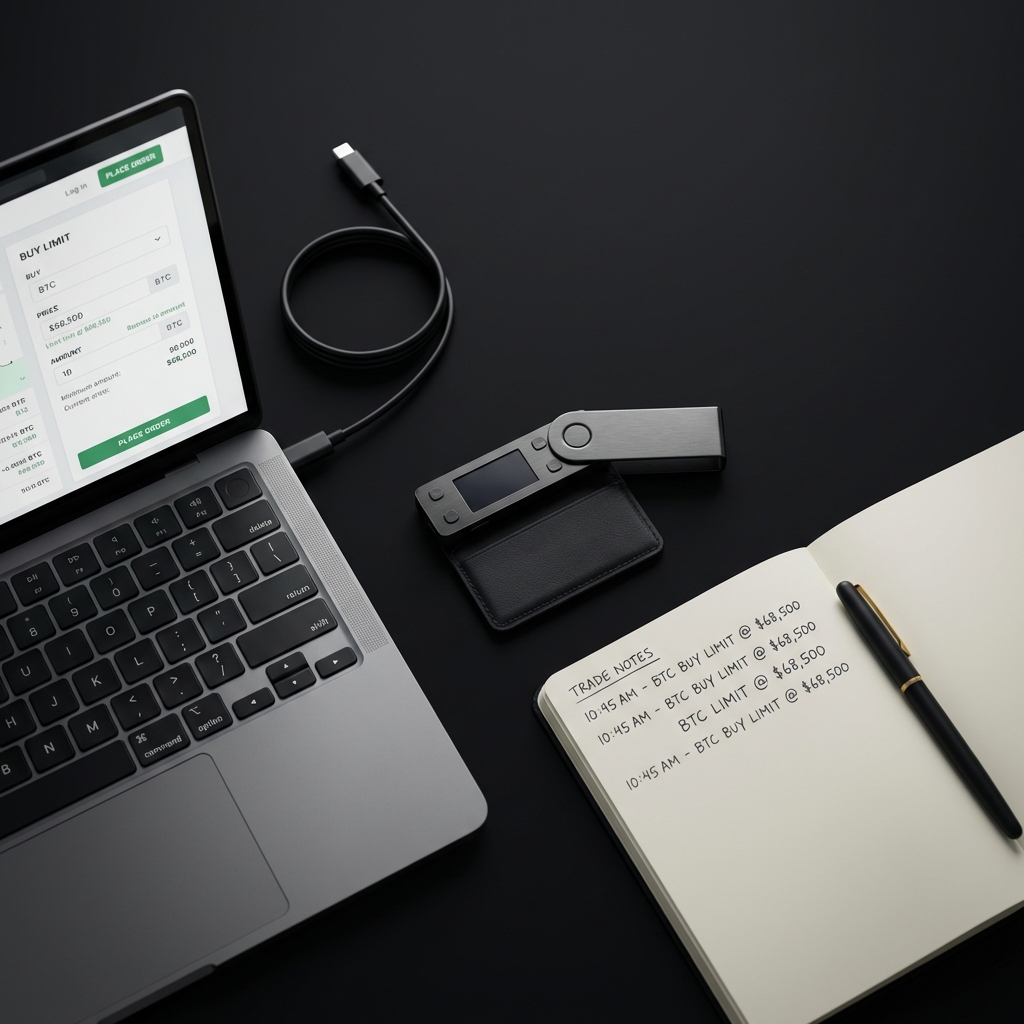
Also, practice with limit orders to avoid paying excessive spreads, and use the exchange’s demo features if available. Keep a trading journal noting why you entered a trade, the order type, your size, and what happened.
Checklist before your first trade
Answer these questions clearly before placing money on the line:
- Do I know whether I will actually hold the crypto or only a contract?
- Can I afford to lose the funds I plan to use for trading?
- Have I chosen a venue with clear custody and compliance practices?
- Have I set up secure access (unique password, authenticator, withdrawal whitelist) and backed up any private keys?
- Will I begin with small limit orders and avoid leverage?
Simple strategies for beginners that actually make sense
Dollar-cost averaging (DCA) reduces the risk of mistiming an entry by buying a fixed amount at regular intervals. It’s simple, stress-reducing and well-suited to volatile assets.
Core-and-satellite keeps a small core of well-known tokens for the long run and lets you experiment with a small satellite portion for trades or speculative plays.
Trade journaling turns emotion into data. Make short notes for each trade: trigger, size, outcome, and what you learned.
When derivatives make sense — and when to avoid them
Derivatives can be useful for hedging or expressing a particular view. But they require discipline: know expiry, funding rates, maintenance margin, and liquidation rules. Options can define risk but have time decay; perpetuals carry continuous funding costs that can erode returns.
If you don’t understand the payoff or fees, don’t trade it. That simple rule avoids most surprises.
Real examples that teach faster than theory
Ava buys $2,000 of a token at $10 on the spot market and stores it in a hardware wallet. She uses a rule to risk no more than 3% of her total savings on speculative plays. The token rises to $30 in six months; Ava locks in some gains into stable value and keeps a smaller core position to ride further upside.
Ben uses $500 to open a 10x leveraged long. A 12% correction wipes the position and triggers liquidation. Ben loses nearly all his capital. The contrast is about risk management: Ava accepts ownership while Ben treated a contract like a permanent holding.
Technical and non‑technical pitfalls to avoid
Technical pitfalls include poor key management, reused passwords, and falling for phishing pages. Non-technical pitfalls are emotional: fear of missing out, revenge trading after a loss, and overtrading.
Solution: create routine. Decide position size rules, stop-loss levels, and a review schedule. Practice small, learn the mechanics and give habits time to form.
How to pick an exchange without getting dazzled
Look for clear custody statements, transparent fees, visible customer support, and sensible marketing (be wary of exchanges that glorify extreme leverage). Prefer venues that publish proof-of-reserves or independent audits and that list how they segregate customer assets.
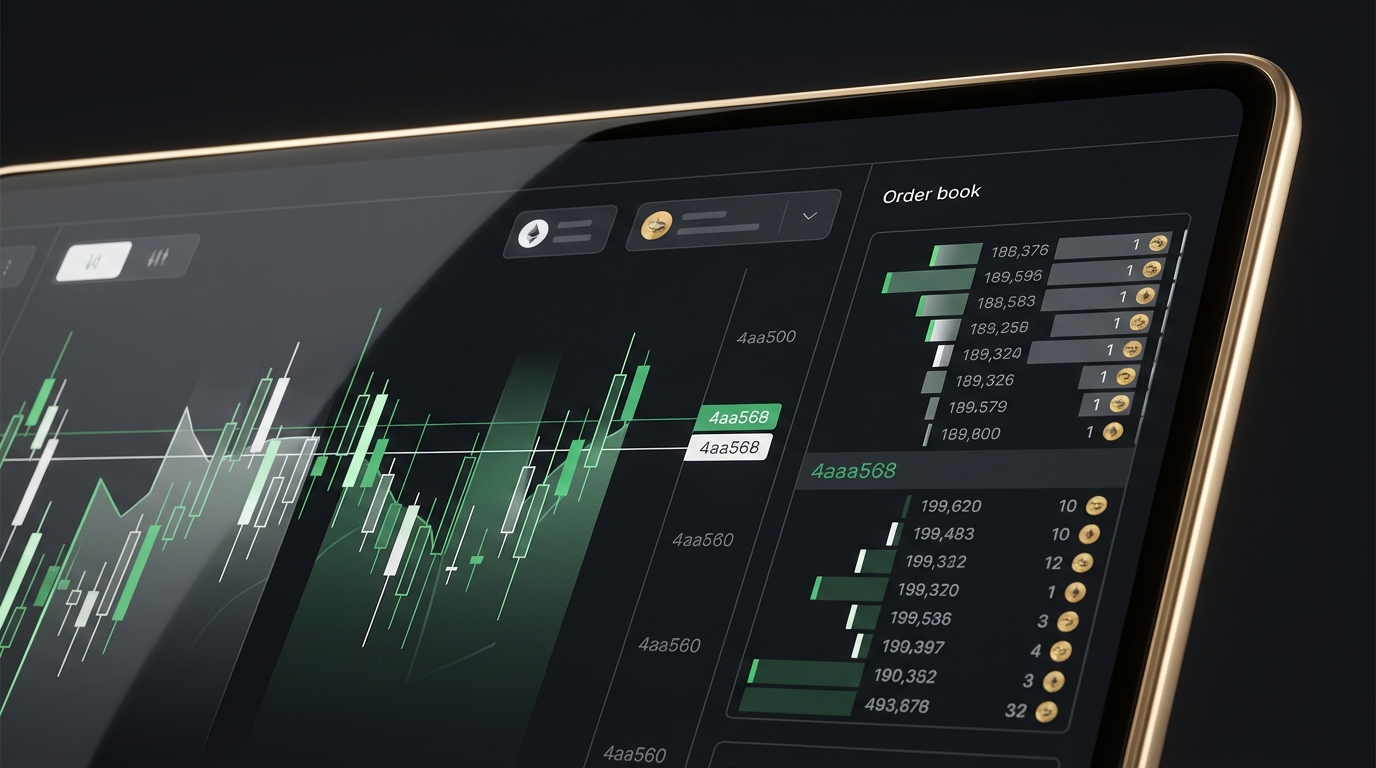
Liquidity and transparent order books beat flashy interfaces. A tidy UX is nice, but actual execution and safety should come first.
Everyday security habits that beat any single gadget
Strong passwords, a password manager, and 2FA via an authenticator app or hardware token make a massive difference. Bookmark official URLs and verify messages through official support channels. Back up seed phrases offline and treat them like paper money under a floorboard - private and secure.

Teach the people around you
Many losses happen when family members or friends unknowingly introduce risk - shared devices, casual password sharing, and social recommendations. Make security part of the conversation.
Taxes, legality and record-keeping
Tax rules vary widely. Many countries tax crypto as property, triggering capital gains events on sales or trades. Maintain records of deposits, withdrawals, and trades; use transaction export features from exchanges and consult a tax professional when in doubt.
Where the industry is heading
Custody standards and disclosure will likely keep rising. That channels more retail activity to regulated venues and raises the cost of doing business for smaller platforms. The hard question is whether regulators can harmonize rules across borders - and whether a few large intermediaries will pose systemic risks as they bundle exchange, custody, lending and staking services.
Everyday habits vs advanced tools
Advanced setups like multi-sig and institutional custody are useful, but good daily habits protect most retail traders. Secure passwords, careful link verification, and conservative position sizing will prevent many common losses.
Plain answers to common beginner questions
Can I lose more than I deposit? Yes - with margin and many derivatives you can lose more than your initial capital. Some exchanges offer negative balance protection; many do not.
Is crypto trading legal where I live? It depends. Many jurisdictions allow retail trading under KYC and AML. Others restrict or ban certain services. Check local guidance and exchange terms.
Should I keep crypto on an exchange? Convenience has a cost. For active trading, keep a small amount on a reputable exchange. For long-term holdings, prefer a hardware or reputable non-custodial wallet.
What about taxes? Keep records and consult a professional. Taxes apply in many places.
Practical risk-management rules you can use today
- Position size rule: risk only a fixed percent (for many, 1–3%) of total savings on speculative plays.
- Use limit orders when possible to control entry price.
- Avoid leverage until you understand liquidations and margin mechanics.
- Keep a simple watchlist to avoid reactionary trading on every small move.
Learning in public — resources that don’t overwhelm
Start with foundational guides, regulator primers that explain custody and investor protection, and exchange help centers on order types. Practice with small trades and keep each transaction as a learning step.
Want clearer guidance on exchange choice and custody?
If you want a practical checklist and quick links to custody guidance, see our crypto hub for concise, consumer-first resources.
Final practical checklist — do this right now
1) Decide an amount you can afford to lose and set it aside for learning.
2) Pick a reputable exchange and complete KYC.
3) Place a small limit buy on a well-known token and record the trade in a journal.
4) Secure accounts — unique passwords, authenticator 2FA, and withdrawal whitelists.
5) Move long-term holdings to a hardware wallet if you want control.
Short, realistic parting advice
Crypto trading’s appeal will endure because markets run around the clock and offer many tools. But success comes from humility, small deliberate steps, and a focus on custody and risk. Start small, protect what you control, and let experience build your confidence.
FinancePolice keeps watching these changes and leans toward custody and compliance over quick-return promises - a quiet habit that protects retail traders.
Yes — if you use margin or trade derivatives you can lose more than your initial deposit. Exchanges vary: some offer negative balance protection, many do not. Always review margin rules, maintenance levels, and liquidation mechanics before using leverage.
Choose an exchange that is transparent about custody, fees and dispute resolution. Prefer platforms with visible compliance, clear custody language, independent audits or proof-of-reserves when available, and a sensible limit on extreme leverage. Liquidity and clear order books matter more than flashy interfaces.
Start small, use spot markets rather than leverage, and practice with limit orders. Dollar-cost average to reduce timing risk, keep a trading journal to learn from each trade, and limit speculative exposure to a small percentage of your savings. Also follow reputable educational sources like FinancePolice for clear, non-technical guidance.
References
- https://financepolice.com/advertise/
- https://www.sec.gov/about/crypto-task-force/written-submission/ctf-written-agc-bpi-fsf-custody-comment-ltr-09182025
- https://www.cozen.com/news-resources/news/2025/sec-crypto-2-0-roadmap-of-sec-developments-on-cryptocurrency-and-digital-assets-in-2025
- https://www.clearygottlieb.com/news-and-insights/publication-listing/2026-digital-assets-regulatory-update-a-landmark-2025-but-more-developments-on-the-horizon
- https://financepolice.com/category/crypto/
- https://financepolice.com/crypto-exchange-affiliate-programs-to-consider-heres-what-you-need-to-know/
- https://financepolice.com/bitcoin-crypto-markets-2026-outlook-stronger-fundamentals-meet-persistent-bearish-sentiment/